

Steam creator Valve is one of the most respected names by fans in the gaming industry. More than 12 years ago, Valve introduced the first Steam Machine. The reliance on Linux and a loose hold on OEM hardware specifications ultimately led to its failure.
Now, Valve is taking another shot at the living room gaming PC with a new Steam Machine. This time around, the company appears to be taking a different approach based on lessons learned from the Steam Deck’s success.
In this article, we’ll explore the Steam Machine’s specs, the peripherals, including the redesigned Steam Controller, the release date window, and the price speculations surrounding Valve’s upcoming hardware.
The Steam Machine’s Specs
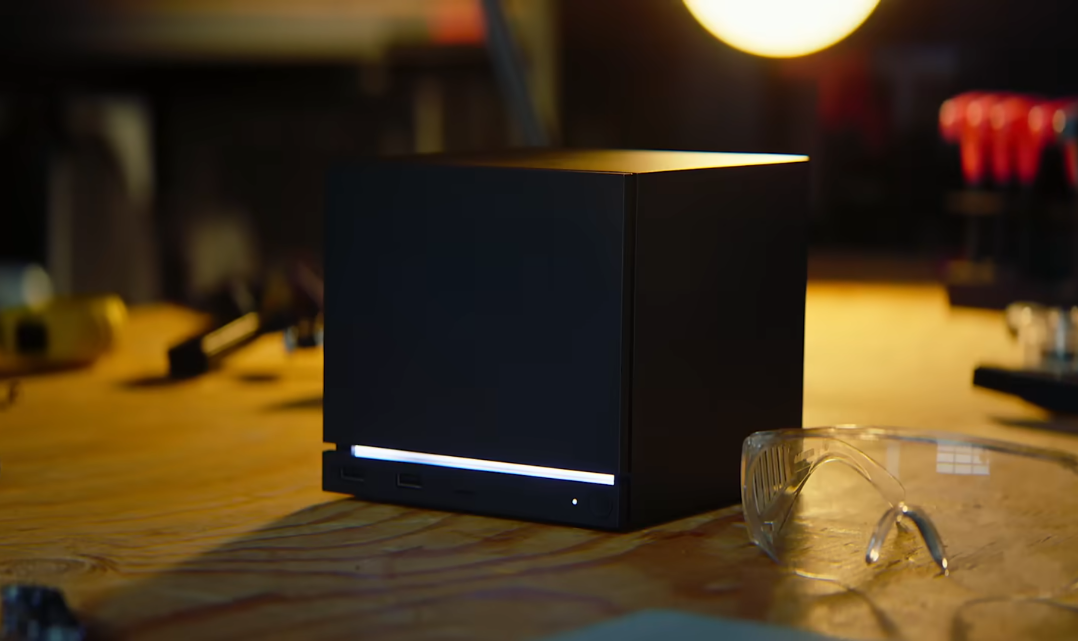
Valve has revealed the official specs for the Steam Machine, featuring a semi-custom AMD Zen 4 CPU with 6 cores and 12 threads that boost up to 4.8 GHz.
The GPU is a semi-custom RDNA 3 with 28 compute units and 8GB of GDDR6 VRAM, running at 2.45 GHz and rated for 110W TDP. The system comes with 16GB of DDR5 RAM, which uses SODIMM modules that will be accessible for upgrades. For storage, there are two fast NVMe options at 512GB and 2TB, plus a microSD slot for additional library capacity.
Outputs include DisplayPort 1.4 and HDMI with support for 4K at 120Hz. The entire system is housed in a compact cube chassis roughly 6 inches per side with an internal 200W power supply.
Valve claims the Steam Machine delivers up to six times the performance of a Steam Deck, targeting 4K 60fps gaming through AMD’s FSR 3 upscaling technology.
The Steam Controller
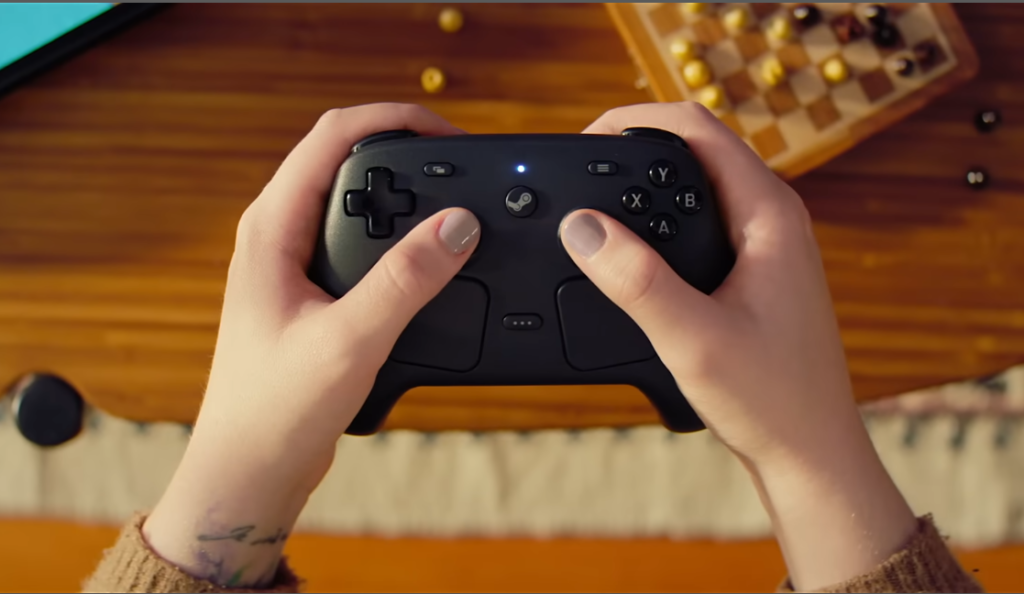
The new Steam Controller comes with dual trackpads, dual capacitive thumbsticks with TMR magnetic technology, a 6-axis IMU, and capacitive grips. The magnetic thumbsticks use TMR technology for improved responsiveness and long-term reliability, eliminating stick drift problems.
There are four vibration motors, two in the trackpads and two in the grips. Battery life reaches over 35 hours, and the controller connects via a proprietary USB puck with low-latency wireless, Bluetooth 4.2 or higher, and USB-C for wired play and charging.
When compared, the PS5’s DualSense controller takes a different route. It features haptic feedback, adaptive triggers, a touchpad, a speaker, motion controls, and a lightbar. Battery life is significantly shorter compared to the Steam Controller’s 35 hours. The Steam Controller focuses on versatility with dual trackpads for precision control.
The Price
Another crucial detail missing from Valve’s Steam Machine announcement was its price. Valve has kept quiet about official pricing, leaving fans and analysts to speculate based on leaked information and market conditions.
A Czech retailer leaked prices suggesting the 512GB model could cost $950 and the 2TB model could reach $1,070. Some analysts estimate the Steam Machine could cost around $700, while others predict a price between $400 and $500. The wide range of predictions shows just how uncertain pricing remains at this point.
DRAM prices rose by 172% throughout 2025. This spike in RAM prices has made some people predict that the Steam Machine’s final price might be higher than current consoles.
The price is the most important aspect of the success of the Steam Machine. uptake will be heavily dependent on pricing. If Valve prices the Steam Machine too high, it risks becoming an expensive niche product instead of an accessible living room gaming option that can compete with PlayStation and Xbox.
Steam Machine Release Date Window
The Steam Machine will be released in Q1 2026. That means you can expect the Steam Machine to go on sale no later than 31 March 2026, unless Valve runs into unforeseen delays.
There’s a very good chance that recent price hikes and part shortages may force Valve to push that release date back. The RAM crisis affecting the entire PC gaming market could impact Valve’s production timeline, but the company hasn’t officially announced any delays yet.
Final Words
The Steam Machine represents Valve’s second attempt at conquering the living room gaming space. With powerful specs, an innovative controller, and lessons learned from the Steam Deck’s success, this hardware has serious potential.
The price remains the biggest question mark, especially with RAM shortages driving costs up across the industry. If Valve can keep pricing competitive with consoles while delivering on the promised performance, the Steam Machine could finally succeed where its predecessor failed over a decade ago.